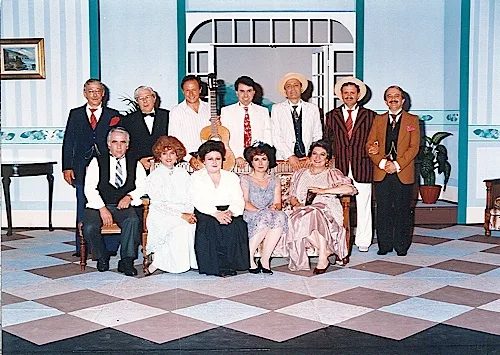
Productions · 1993
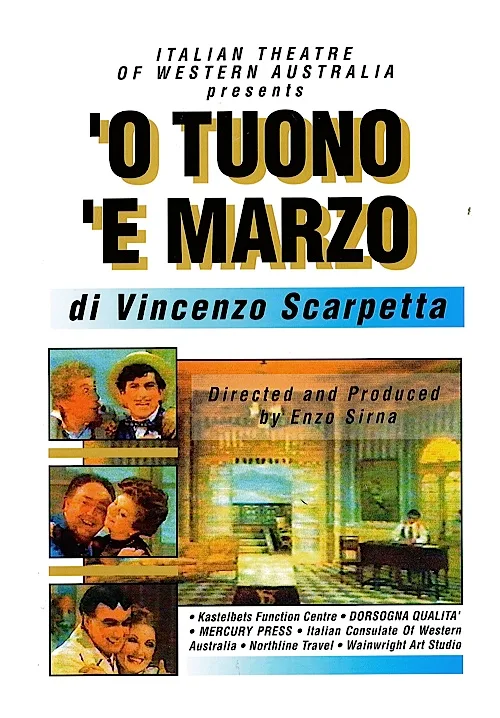
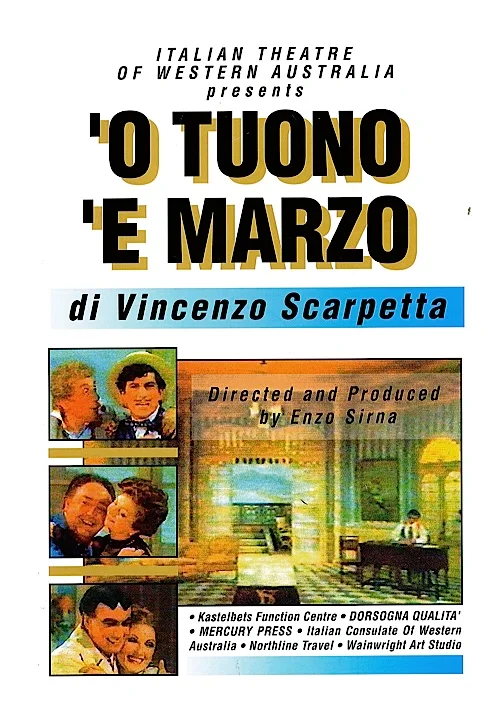
‘O tuono ‘e marzo
Directed by Enzo Sirna
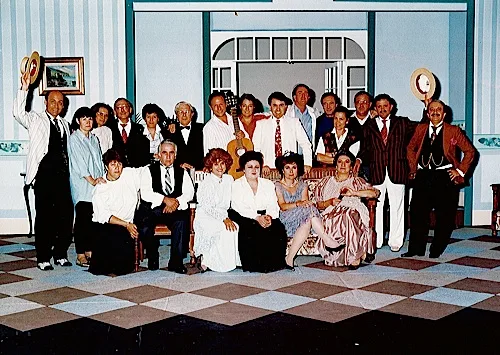
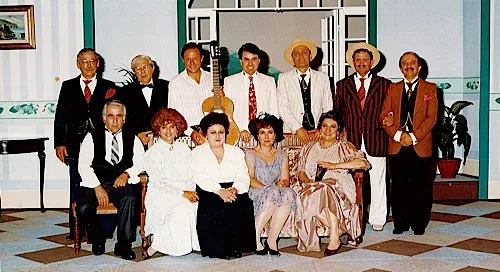
Cast
- Nannina
- Lina De Borrello
- Giulietta
- Maria Sannino
- Mimé
- Giuseppe Fulgaro
- Turillo
- Bruno Napolitano
- Cavaliere Teodoro Morzetta
- Giorgio Conte
- Don Saverio Borzillo
- Luciano Pinto
- Sofia (sua sorella)
- Carmela Briguglio
- Felice Sciosciammocca
- Enzo Sirna
- Alfonso Trocoli
- Giuseppe Tizzano
- Ciccillo
- Nick Cappa
- Marietta
- Angela Signorile
- Guest appearance
- Giorgio Manfredi
(plus)
About the play
“Essere pazzo come marzo” is a popular saying in Italian which in English means “to be as mad as a March hare”. Italians also speak of “marzo pazzo” because the month of March is notorious for its unpredictable stormy weather and especially its thunder-claps. For this reason, the connection has been made between this month and people who suffer from a changeable and capricious, even neurotic personality. Such a person is often on edge and , in fact, if one is accused of being “born in the month of March” (“essere nato di marzo”), regardless of the exact date of birth, it is a way of hinting at one’s questionable nervous condition.
These ideas and prejudices were perhaps at the back of Vincenzo Scarpetta’s mind when he wrote ‘O tuone “e marzo (which literally means “the Thunder-clap of March”) which was first performed in Rome at the Teatro Quirino in 1912. In fact, it is just such a thunder-clap during a night in March twenty-five years before the play begins that gives rise to the convulsions and confusion which, in a variety of ways, overtake the characters in this play. Sofia, a sensitive young woman, was seduced by a stranger on that March night in 1895, precisely as a consequence of a particularly loud thunderclap. Since then she has been suffering from its effects in terms of her shattered nerves and also because she has had to hide from public view the child born as a result. She has had to watch over this son of hers from afar but now has finally found a way to bring him closer to her. Sofia has also been trying to trace the young man who seduced her, however, another unscrupulous and selfish man, called Turillo, interferes with her plan. It is this “double play”, so to speak, between Sofia and her desire to find her son’s father on the one hand, and Turillo with his own selfish plan on the other hand which propels the action of the play towards its inevitable conclusion.
The characters in this play are fairly standard in the context of the large repertoire of plays which the two Scarpetta’s (father and son) created over many years. Many of these were adapted from salacious and witty French pieces which went collectively under the name of pochade. However, Vincenzo (just as his father before him) always managed to add a personal twist apart from the originality of language and dialogue, of course. In the case of Eduardo, it was the new character of Felice Sciosciammocca who was used over and over again in his plays though different guises and with different character traits. In the case of this play, we see a new and intriguing character in Turillo, a poor but resourceful character who can be extremely cunning when there is something to be gained from situations as they unfold around him. Turillo is a barefaced liar whose ignorance is quite evident to us, but he does not let this deter him and, in fact, he seems able to easily fool those around him into believing whatever they want to believe; he simply supports the suppositions of others and then improvises his way through any obstacles and potential objections as they arise, resorting to clichés and outright lies to support his empty claims which he hopes will secure him a comfortable living. It is his dual nature as well as his conscious struggle for survival in an uncaring world – in which he features both as victim and oppressor – which bring Turillo close to those other better know characters from the Commedia dell’arte, Arlecchino and Pulcinella, and just as these two can endear themselves to us while still managing to survive, so does Turillo in this fast paced and enthralling comedy of errors and farcical intrigue.