Productions · 1991
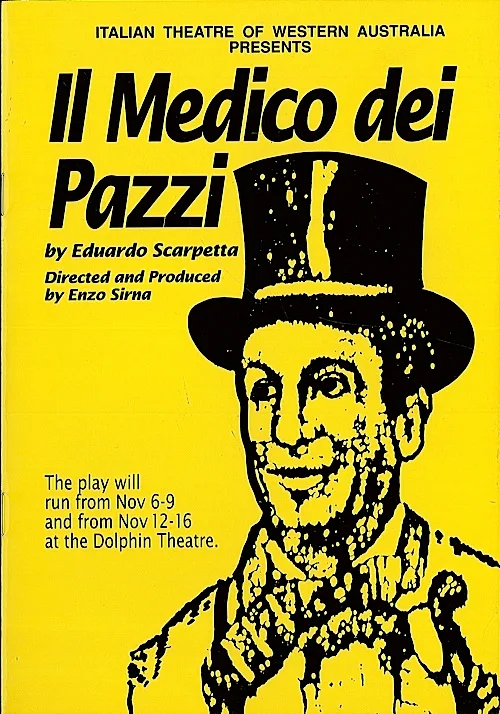
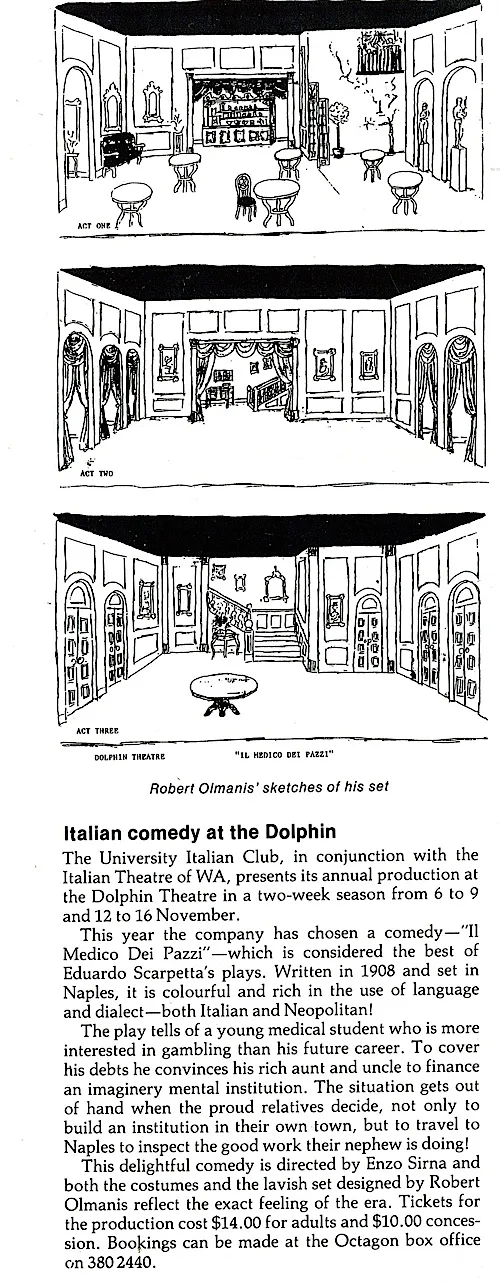
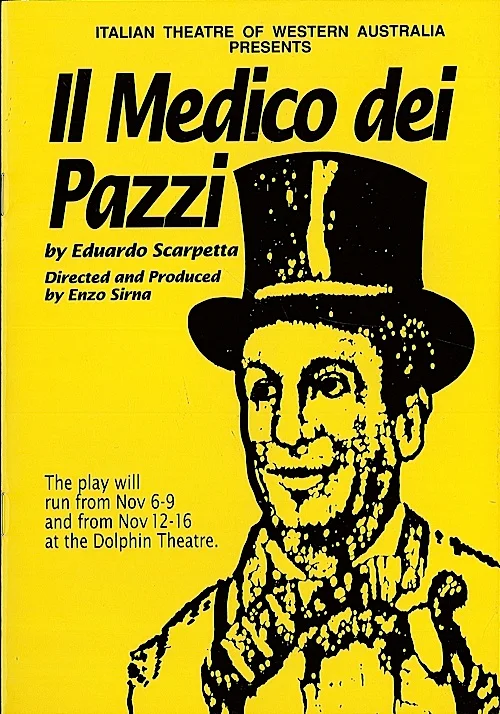
Il medico dei pazzi
Directed by Enzo Sirna
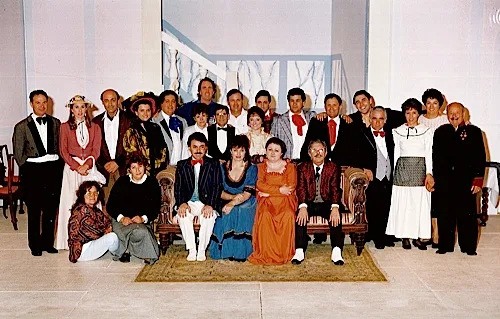
Cast
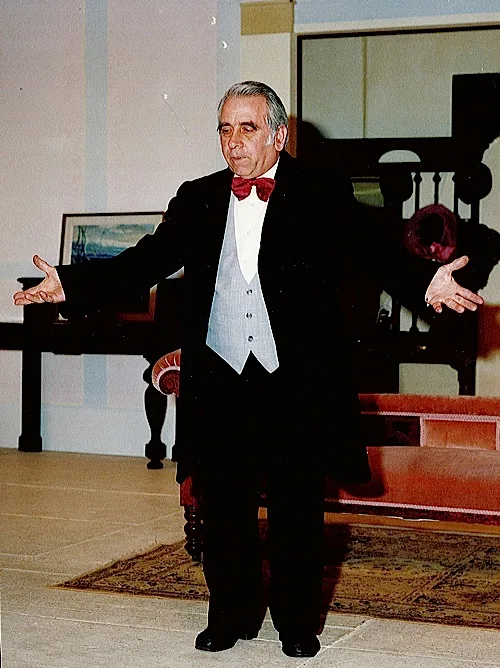
- Felice Sciosciammocca
- Bruno Napolitano
- Ciccillo (suo nipote)
- Enzo Sirna
- Michelino
- Tony Rapanaro
- Raffaele
- Luciano Pinto
- Don Carlo
- Nick Cappa
- Enrico
- Giuseppe Fulgaro
- Luigi
- Alfredo Mori
- Il Maggiore
- Giuseppe Belladonna
- Peppino
- Elio Raspa
- Concetta
- Lina Del Borrello
- Amalia
- Angela Signorile
- Rosina
- Linda Savietto
- Margherita
- Natalie Casale
- Bettina
- Lucia Conte
- Carmela
- Claudia Vecchio
- Primo Avventore
- Bill Vocisano
- Secondo Avventore
- Bruno D’Annolfo
- Venditore Ambulante
- Ross Romeo
About the play
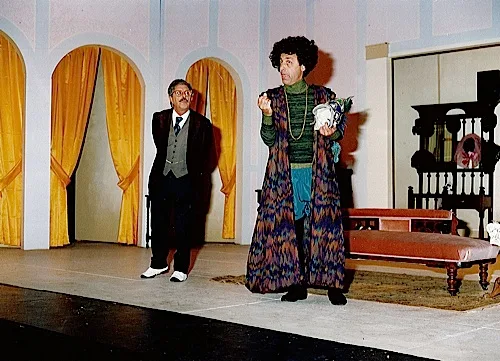
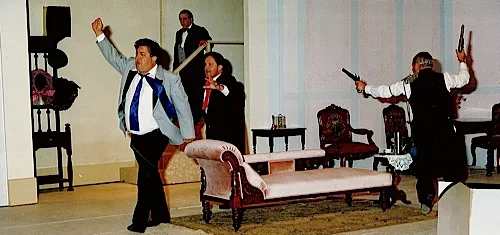
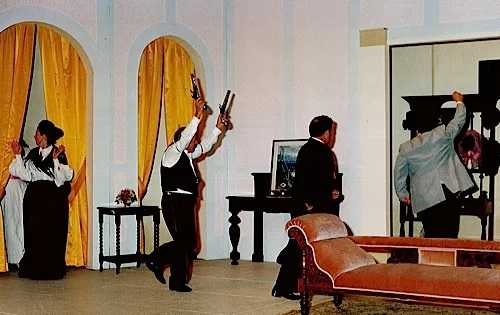
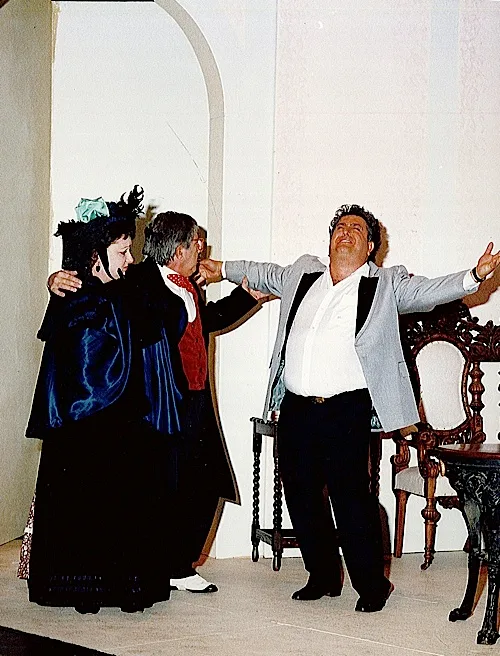
In Il medico dei pazzi (the Neapolitan title is “O miedeco d’e pazzi) which was first performed in 1908, Felice Sciosciammocca is a lovable sort of chap, as kind as he is gullible although he must have been smart enough to accumulate a good deal of wealth somewhere along the line. The main problem he faces at the present time is mostly how to deal with his second wife who does not give him a moment’s peace. However, he prides himself in his nephew’s achievements which he believes his money and his protection have largely fostered in the young man. This goes to show that Felice is very conscious of his own humble origins and would do anything to improve his social standing even going so far as to imagine himself in the role of philanthropist (he wants to open a mental institution in his home town). It is this ambition which, in fact, creates the farcical situation on which this play is constructed.
Sciosciammocca’s pride and faith in his nephew are the cause of his being so totally duped as to make himself ridiculous at every turn of the plot. As a character, he becomes totally dependent on the situations which are really created by his own gullibility. Unable to realise that he has been duped by his nephew, he then incurs a whole series of self-generated deceptions due to the ambiguities created by the idiosyncrasies of the others which are too subtle for him to perceive and resolve in his own mind. This makes for an entertaining flow of events which keep him fixed to a coherent pattern; he cannot believe the truth of what he sees in other people – no matter how peculiar they may be in themselves – because he has blindly accepted to believe what he has been told by his nephew. In this comical clash of opposites – the clash of the real truth as opposed to an imagined truth – Il medico dei pazzi moves at dizzying speed towards a predictable ending. Sciosciammocca’s hilarious misunderstandings have given each character and their individual situation a memorable comical dimension which has been brilliantly captured by Eduardo Scarpetta by way of a fine balance between action and dialogue, the two outstanding elements of playmaking. The playwright has managed to achieve such an admirable combination as to make Il medico dei pazzi perhaps his best play in a whole series of successful comedies which include such “evergreens” as Miseria e nobilté , Li nepute de lu sinneco, and “Na santarella.
An appropriate quotation from Scarpetta himself is sufficient to convey the essence (and the appeal) of his kind of comedy at the very moment of their creation – “Il pubblico voleva divertirsi…”.