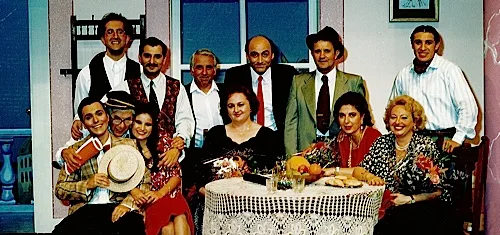
Productions · 1995
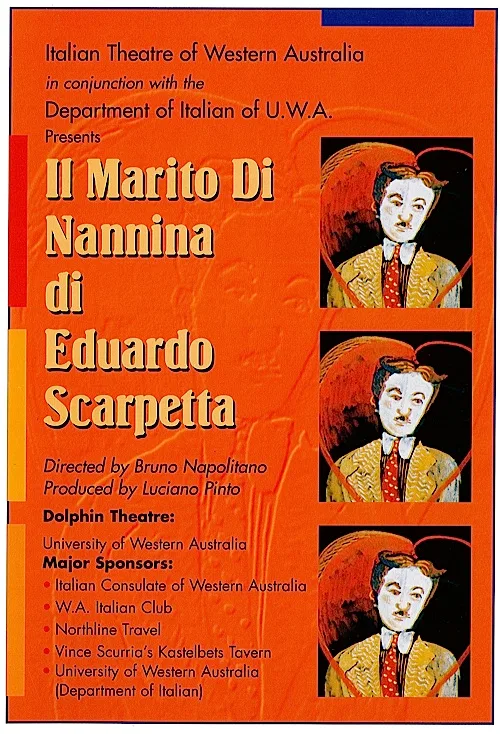
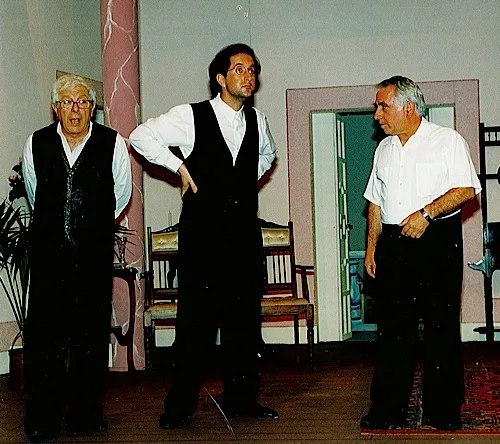
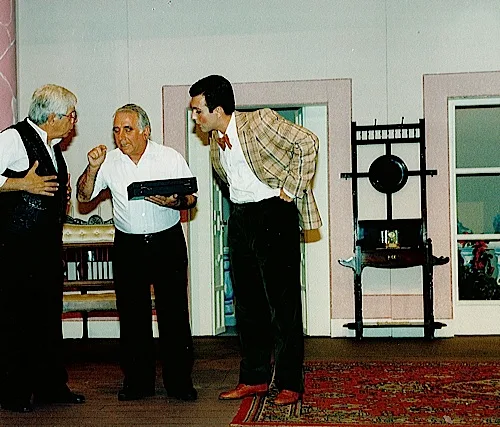
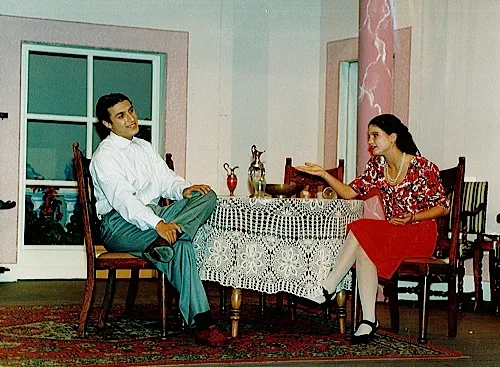
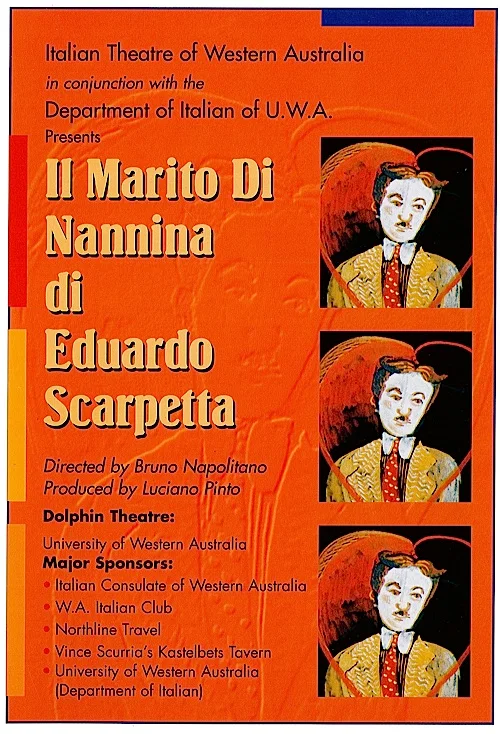
Il marito di Nannina
Directed by Bruno Napolitano
Cast
- Don Nicola Paletta
- Bruno Napolitano
- Don Ciccillo Tarantella (medico)
- Giuseppe Fulgaro
- Elena (moglie di Don Ciccillo)
- Manuela Di Nola
- Don Felice, detto Celestino
- Gianpaolo Casali
- Errico Bernard (sposo di Nannina)
- Vincenzo Pariselli
- Nannina (figlia di Don Nicola)
- Mirella Scaramella
- Federico (amico di Bernard)
- Alessandro Civiletti
- Teresina (sorella di Don Felice)
- Maria Sannino
- Leone Mitraglia
- Luciano Pinto
- Pascarella (portinaia)
- Lina Del Borrello
- Biase
- Nick Cappa
- Francisco (servitore in casa di Don Nicola)
- Giovanni Conte
About the play
Amongst Eduardo Scarpetta’s best plays we should include Il marito di Nannina (1886), one of many successful plays in which he delighted in giving his own humoristic and fairly realistic appraisal of contemporary Neapolitan society. This play revolves entirely on a basic misunderstanding caused by Felice, Nannina’s forgotten and rejected fiancé, who maliciously thinks that Errico Bernard, Nannina’s new fiancé, is a wife-killer just out of prison and perhaps ready to do the same to Nannina. Felice is seeking revenge for being so spurned, and easily convinces himself and Nannina’s father of what he falsely believes to be the truth. Add to this basic error a whole series of circumstantial events and facts which seem to add weight to Felice’s suspicions, and Scarpetta had the fundamental ingredients to create a lot of mirth on stage out of a typically human tendency (or affliction, as Pirandello might put it), which is to be swayed and tormented by our doubts, suspicions and inner ambiguities and uncertainties (especially when it concerns the thorny question of other people’s identity). Characters create their own problems and torments, which could easily and quickly be resolved, if one had the gumption and honesty to face up to the truth (or whatever it is that we perceive or persuade ourselves to be either true or false) in the first place. Also, to believe the worst in other people has always attracted the comic writer’s attention for the laughs it brings, due to the contradictions and opposite states of mind which plague those who are guilty of this human foible, when the truth is finally revealed.