Productions · 1996
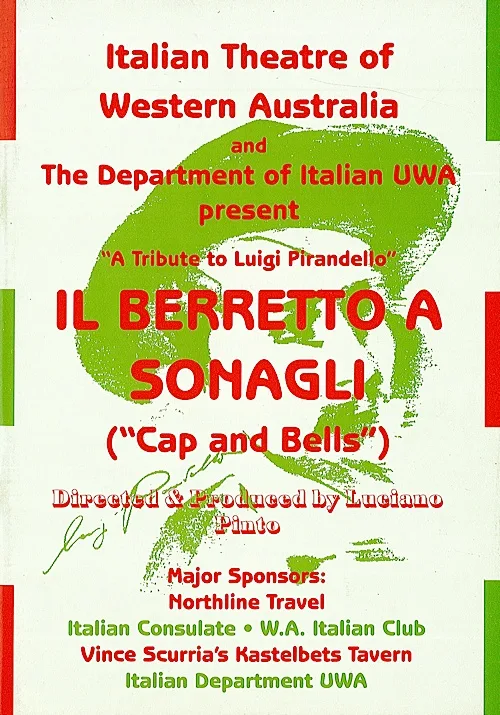
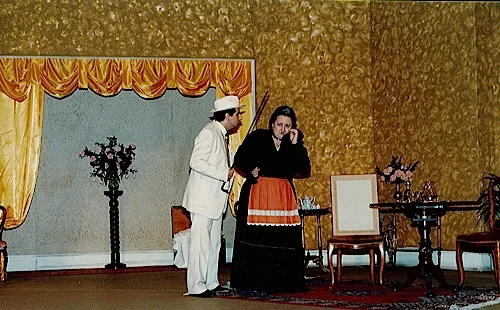
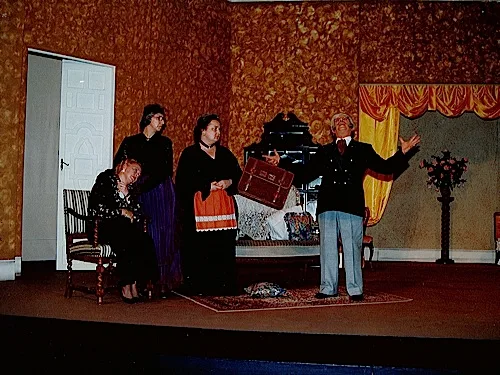
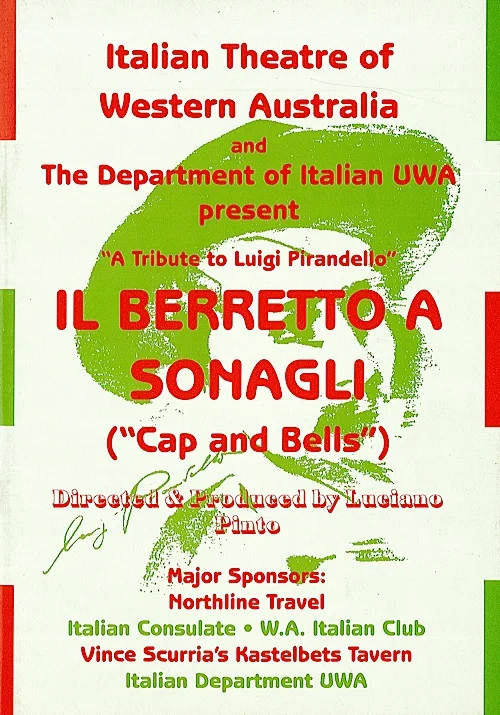
Il berretto a sonagli
Directed by Luciano Pinto
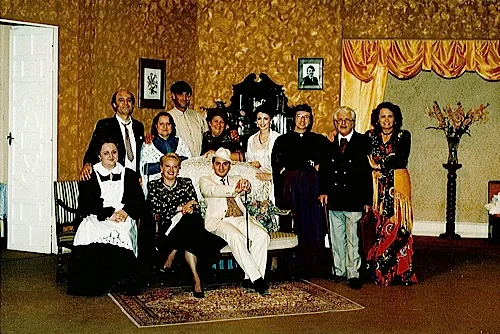
Cast
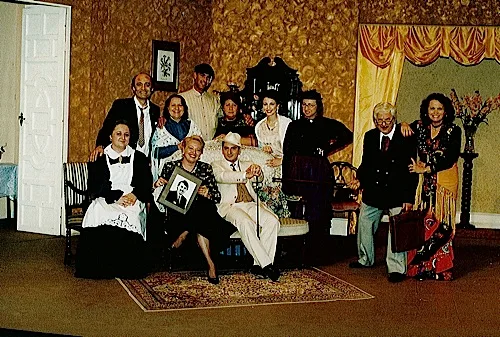
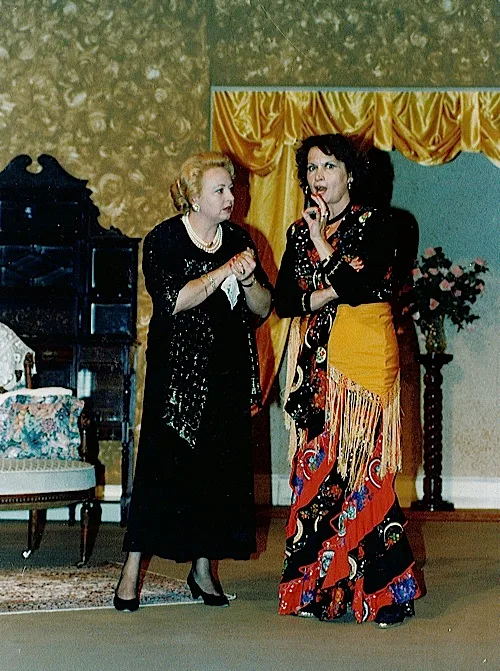
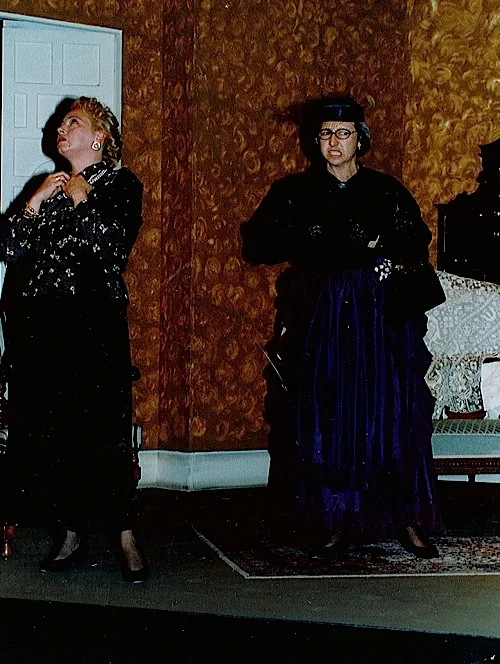
- Donna Beatrice Fiorìca
- Manuela Di Nola
- Fana (Beatrice’s maid)
- Lina Del Borrello
- La Saracena (town gossip)
- Maria Conte
- Fifé La Bella (Beatrice’s brother)
- Vincenzo Pariselli
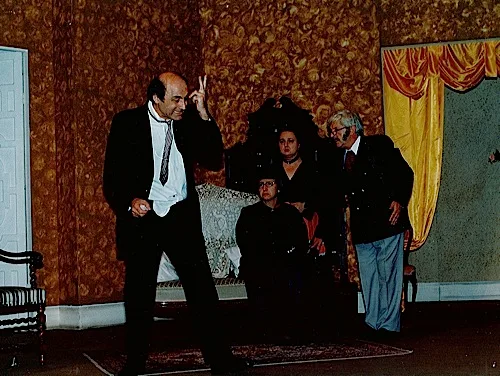
- Ciampa (Cavalier Fiorìca’s book-keeper)
- Luciano Pinto
- Spanò (head of police)
- Bruno Napolitano
- Assunta La Bella (Beatrice’s mother)
- Emanuela Flavel
- Nina Ciampa (Ciampa’s wife)
- Annette Bianco
- Vicini e vicine di case Fiorìca
- Nick Cappa
- Bill Vocisano
- Nicoletta Ciampini
- Giorgio Conte
- Franca Potalivo
About the play
Pirandello’s Sicily had many faces – or masks, to be more precise – but the one which most theatre – goers relate to is the world of strong passions spilling over into blood-lust. This was the betrayal’and-revenge world of “verismo” theatre and opera, Callvalleria rusticana, bewitching sensuality – like a she-wolf’s – and all the folklore that belonged to that world. A Sicilian character in another play by Pirandello defined her island as a land inhabited by men and women “burning with an instinctive rage that makes them savage to one another”;not real human beings, therefore, but “frightening wolves”. Yet we can also find in some of these types a razor-sharp mind and cunning philosophy which is not so much intellectually as it is existentially deep and penetrating. Character like these – Ciampa in this play is a prototype –must inevitably feel at odds with such a social environment for they can see beneath surface appearances, and thus find it difficult to keep quiet or be passively resigned to injustices and abuse (private as well as social and economic). Instead, they become critics of their fellows, attacking things as they are – often obliquely, by means of allusion, for the sake of self-protection – turning vehement especially against the public or outwardly accepted sense of “morality” which they know is only for show and, therefore, a farce or grotesque sophistication and deformation of the real truth. When cornered or pressed, someone like Ciampa will show his “claws”, finding it relatively easy though painful (for they do have a conscience!) to subvert the accepted moral order in order to replace it with another order which is as fictitious as the previous one, but more sensible for it will allow them to survive.
The “soggetto” or subject-matter of this play is based on the age-old comic theme of the “beffa” (a hoax or a trick) played out on some unsuspecting characters whether they deserve it or not. However, this time it will back fire on the perpetrator. Beatrice, a petit-bourgeois town-lady who is intensely jealous of her husband, causes a public scandal in her blind rage – a “temporary kind of madness”, to coin a phrase – due to her belief that she has finally uncovered the truth she suspected about the Cavaliere, her husband: he may be respectable on the outside but deep down he is a libertine and an adulterer. She is now determined to catch him out and teach him a good lesson in open view of all those whom, she believes, have secretly and deceitfully kept the affair concealed including, of all people, Ciampa, a lowly employee and the very husband of the Cavaliere’s lover.
This is the scenario through which Pirandello explores the necessity of respecting appearances in order to avoid serious and even potentially tragic consequences. Beatrice’s rash actions compromise her husband’s and Ciampa’s reputation by sweeping away any pretence or appearance of honour and dignity in them. The consequences, however, could well be fatal as the only way for Ciampa to restore some credibility to his public face is by doing the only (Sicilian) thing socially and morally expected of him: to kill his wife and her supposed lover, the Cavaliere. An alarmed Ciampa had alluded to such an event when he tried to get Beatrice to speak frankly with him on this matter, but she refused. Will Beatrice be rash enough now, after the scandal, to countenance such a bloody outcome? Is her maddening anger still such as to condone this other “madness” forced upon Ciampa by her jealousy? Her blind anger forced her to commit a temporary act of “madness” and now she must make amends to avoid tragedy.
Ciampa relies on his cunning and sophistry in order to retrieve the situation and restore the status quo: Beatrice must appear publicly to have gone crazy out of jealousy. After all, she was foolish enough to think she had the “truth” in her keeping and exercised her individual right to expose it in the first place. If Beatrice can play the role of madwoman convincingly, then everyone must accept her as she seems, and so tragedy will be averted. It is only pretending, Ciampa explains to her, and –as a madwoman- she will enjoy an extra “bonus” of being allowed to spit the truth in everyone’s face, as he should like to do but cannot. This is the only way out, but whether she is pretending or not she must openly submit to public humiliation’And let’s not forget that any adverse reputation tends to be like an oil stain, it never comes off (as Ciampa well knows). He alone is fully aware of this unalterable fact through that nervous and cold laughter ringing out “in rage, savage delight and despair all at the same time” (according to the stage directions).