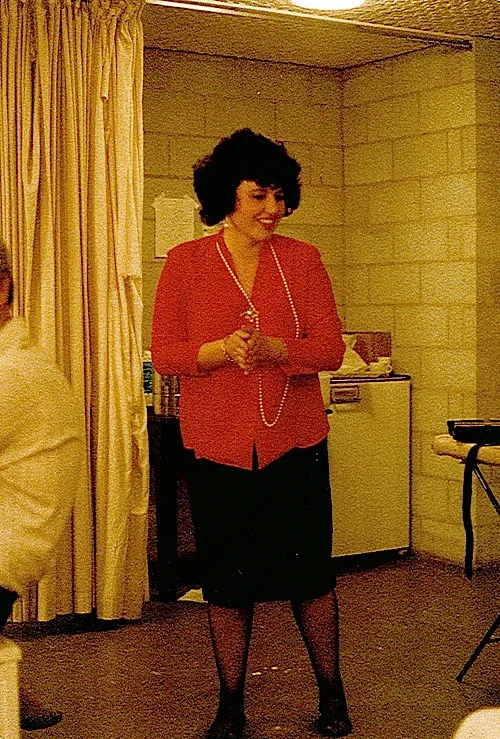
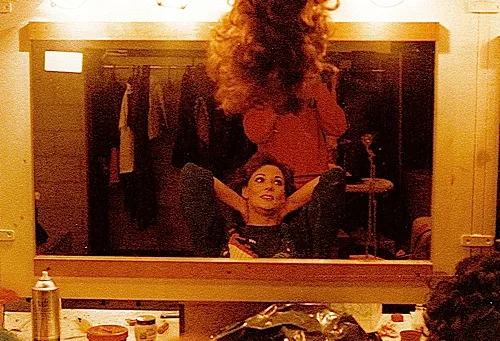
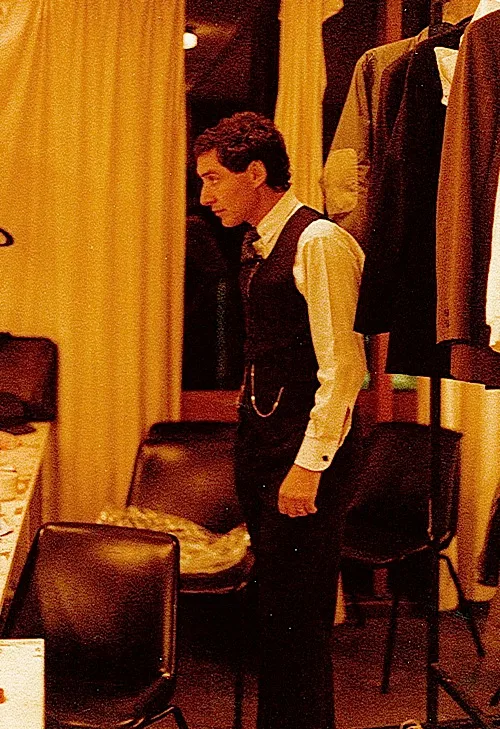
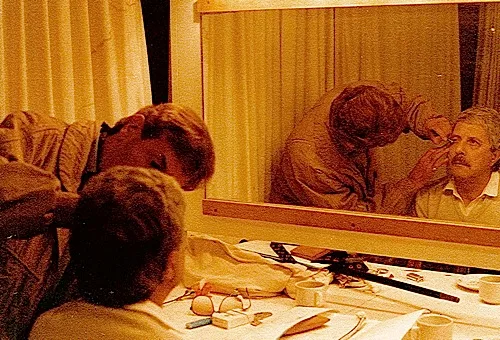
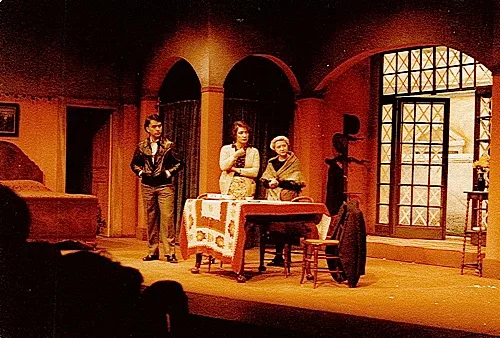
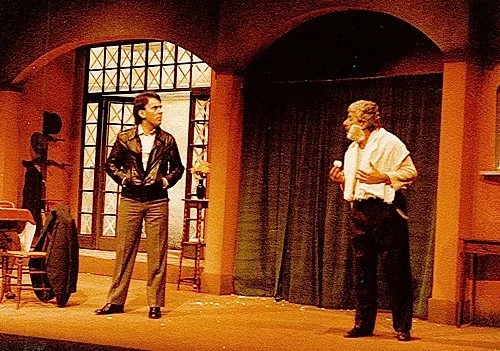
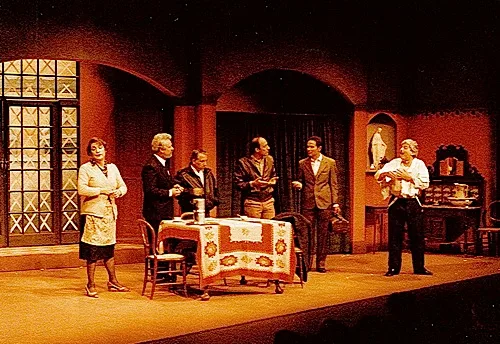
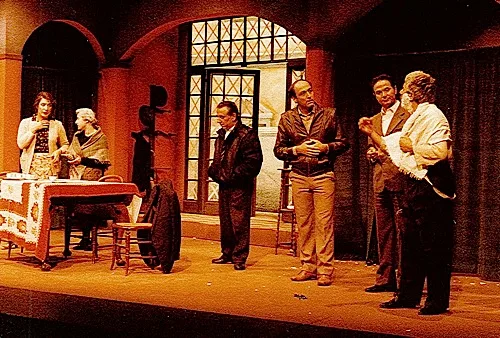
Productions · 1986
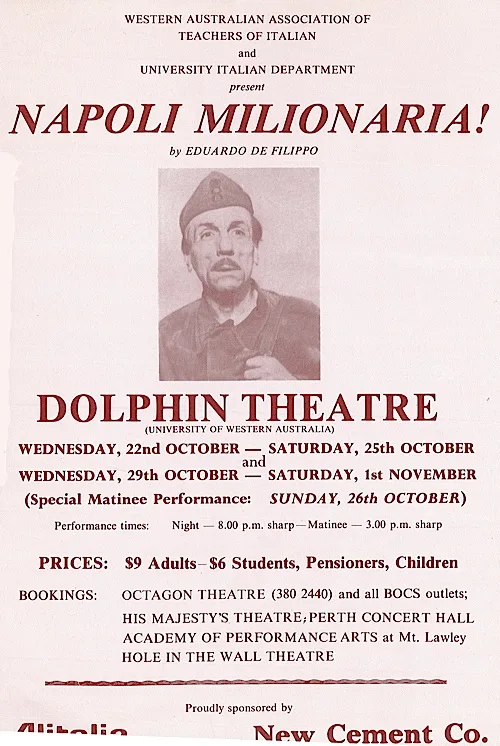
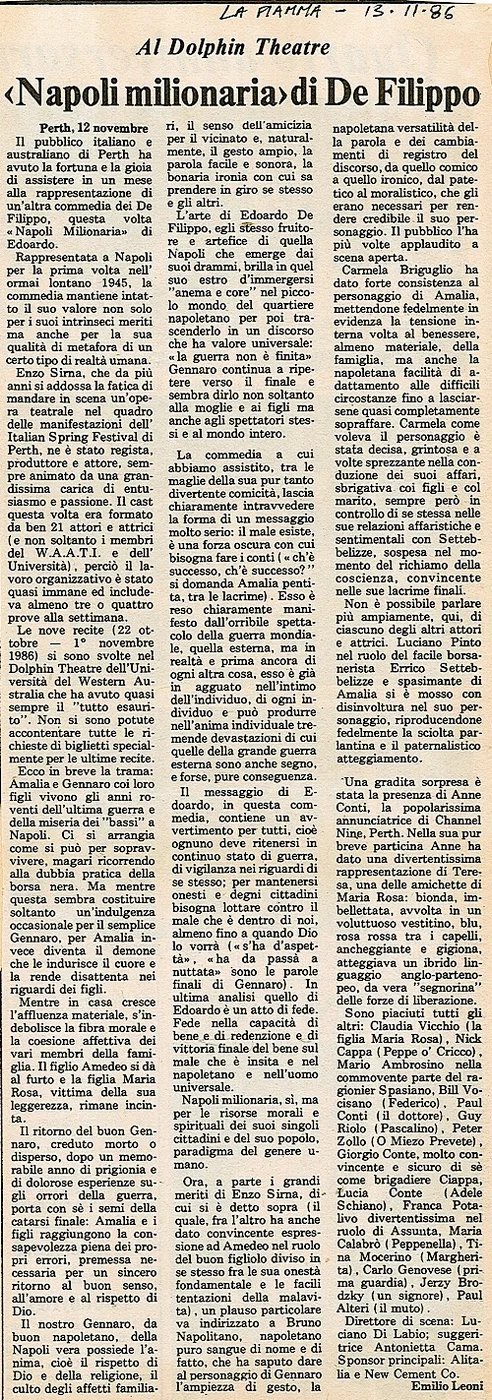
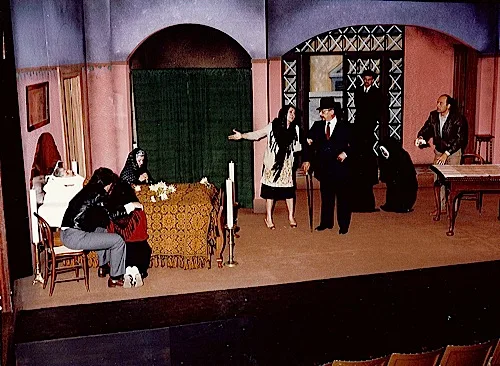
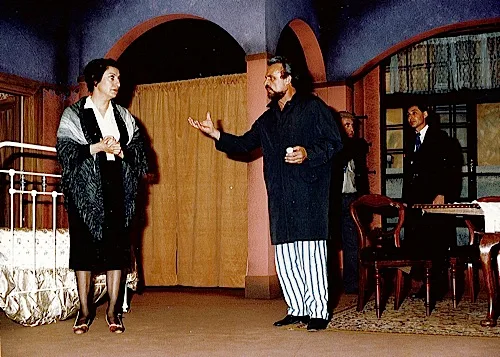
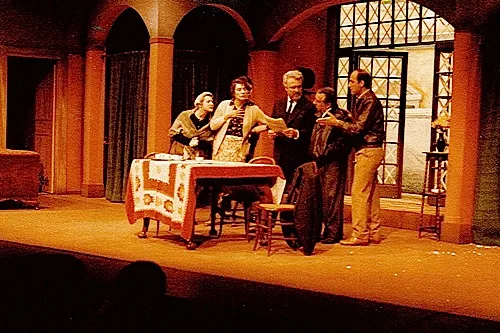
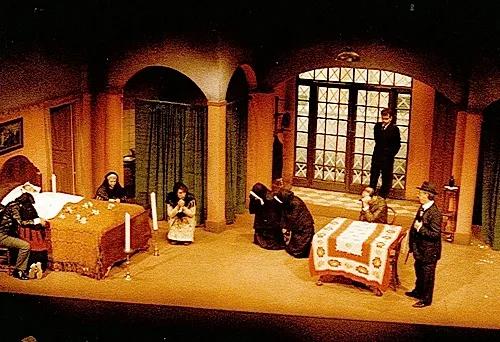
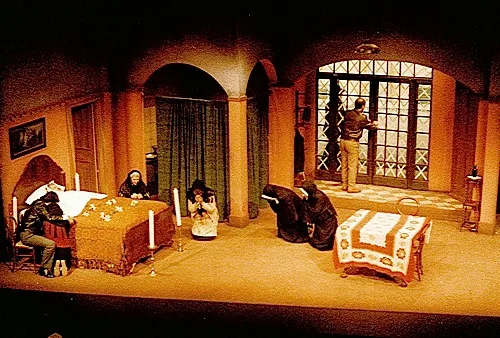
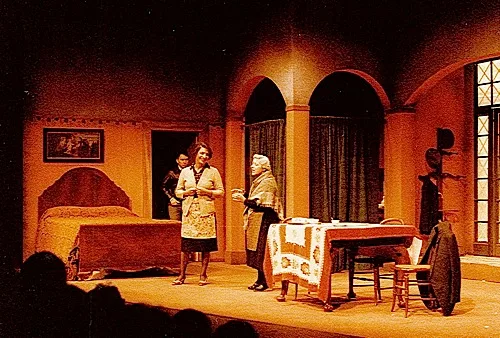
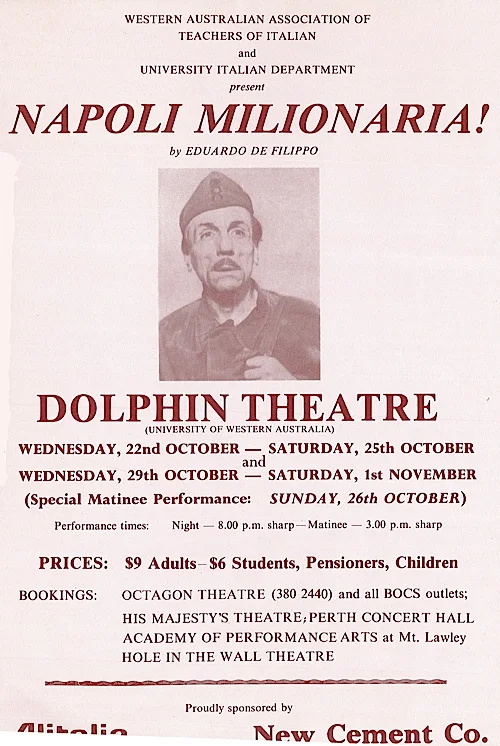
Napoli milionaria!
Directed by Enzo Sirna
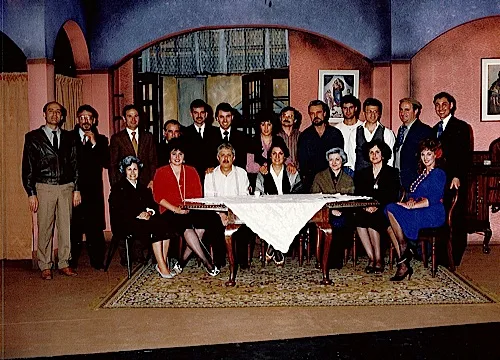
Cast
- Gennaro Jovine
- Bruno Napolitano
- Amalia (sua moglie)
- Carmela Bruguglio
- Maria Rosaria (figlia)
- Claudia Vecchio
- Amedeo (figlio)
- Enzo Sirna
- Errico {Settebellizze}
- Luciano Pinto
- Peppe {“o Cricco}
- Nick Cappa
- Riccard Spasiano (ragioniere)
- Mario Ambrosino
- Federico
- Bill Vocisano
- Il Dottore
- Paul Conti
- Pascalino {“o pittore}
- Guy Riolo
- {“O Miezo Prevete}
- Peter Zollo
- Il brigadiere Ciappa
- Giorgio Conte
- Adelaide Schiano
- Lucia Conte
- Assunta
- Franca Potalivo
- Donna Peppenella
- Maria Calabrò
- Teresa
- Anne Conti
- Margherita
- Tina Mocerino
- Prima guardia
- Carlo Genovese
- Un signore
- Jerzy Brodzki
- Il muto
- Paul Alteri
About the play
In its finely balanced mixture of humour and pathos, Napoli milionaria is a poignant record of how the last war affected the poorer populations, especially in Naples and the other great cities of Italy; it was not simply a case of physical suffering, but of “sufferings of the spirit” (“le sofferenze morali”) as they are defined by Gennaro Jovine at the conclusion of the second act. The tragic events of those years were to be captured for posterity by the Neorealist film directors, as everyone knows, and at the same time Eduardo DeFilippo made his own original contribution with this play written in 1945, the same year of Rossellini’s Roma, cittò aperta (Rome, Open City).
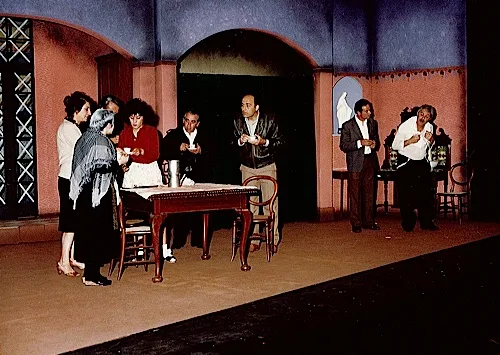
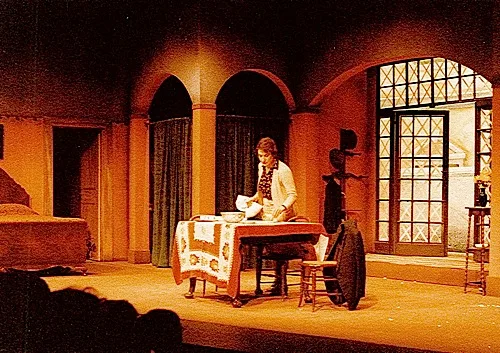
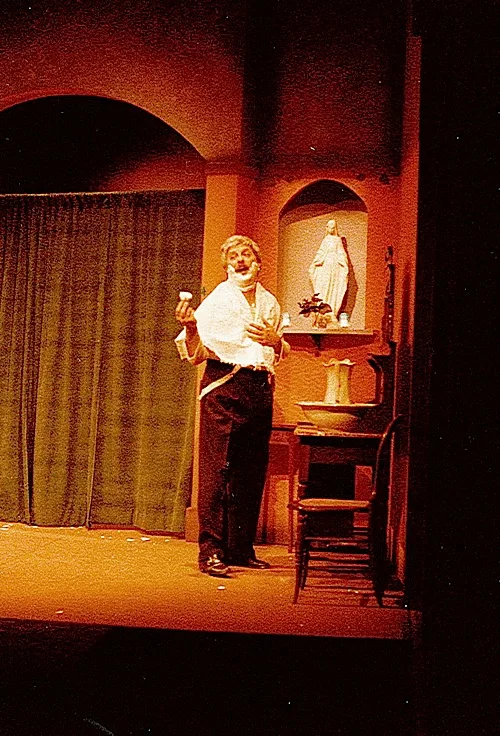
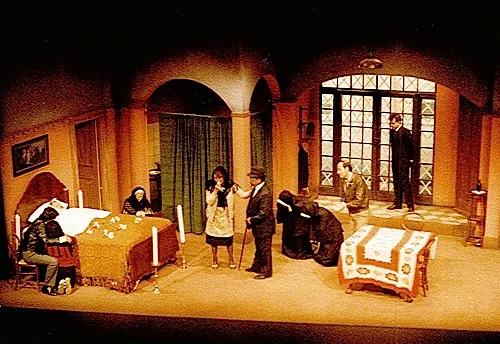
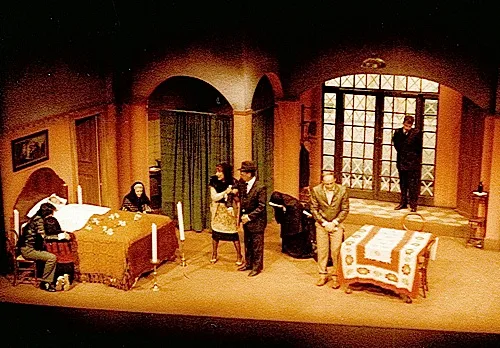
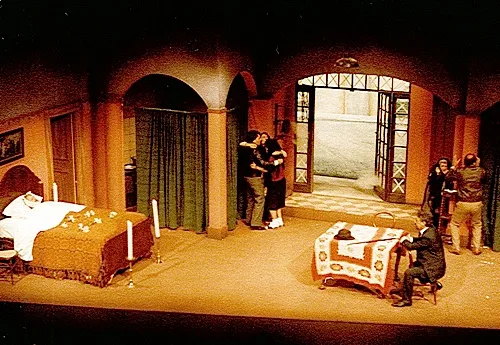
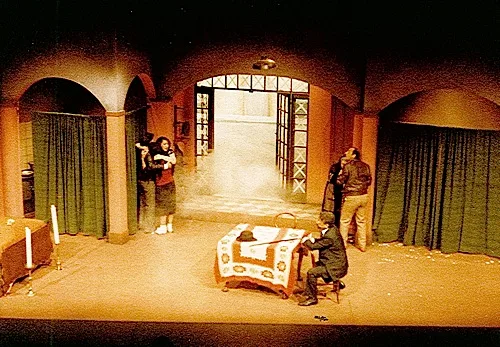
Gennaro Jovine’s family in their “basso” (“vascio”, in Neapolitan dialect) or ground floor room, with its ingenious partitions, opening as it does onto a typical alley, is meant as a typical family struggling for survival at a moment in time when the normally difficult conditions were made almost unbearable by the war. It was very difficult to keep a family afloat and this play was meant to be a kind of sociological document of what can happen to such a family when a moral outlook and a collective sense of living in harmony with one’s neighbour are put aside for the sake of material well-being and selfish interests. This very bitter story of the black market in Naples in those years is deep down a brilliantly crafted piece of dramatic allegory in which the author’s morally committed aim was to give back to the outcasts and the unfortunates of life their justly deserved human dignity. Eduardo himself said of his plays that they were meant to reflect above all his compassionate understanding of the hardships as well as the innate humour of ordinary people, and he was thinking of Napoli milionaria as the starting point of his most committed works for the stage.
“Ho assorbito avidamente, e con pieté la vita di tanta gente”. (Eduardo)