Productions · 1999
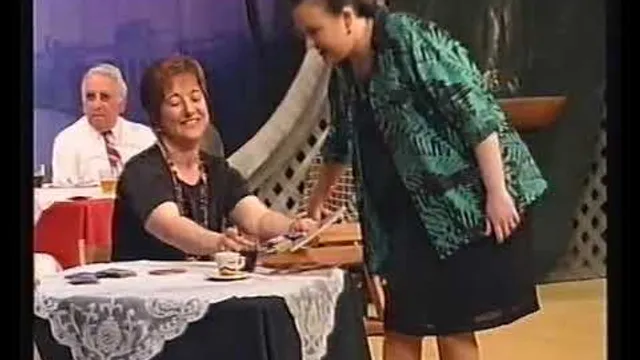
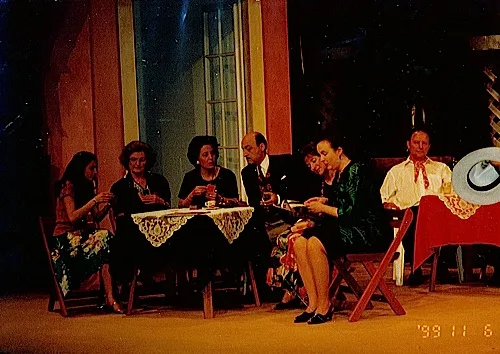
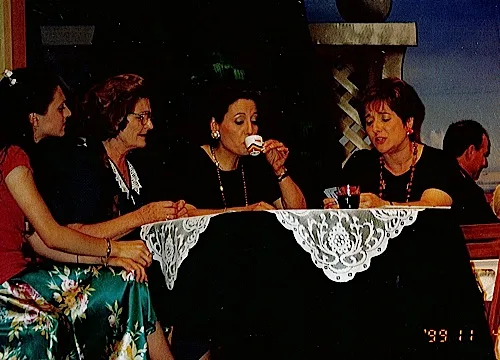
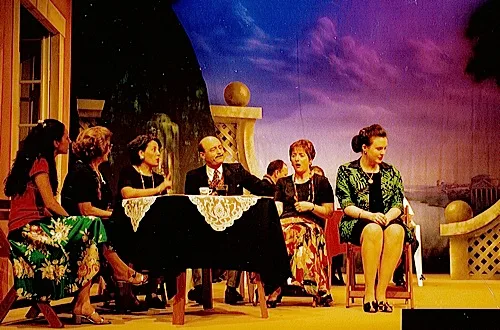
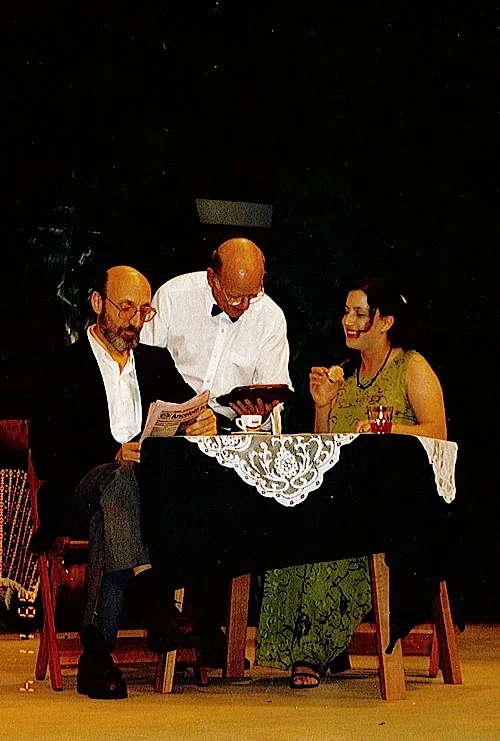
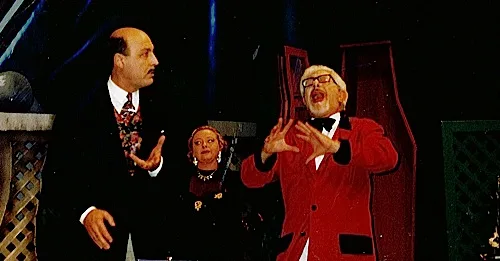
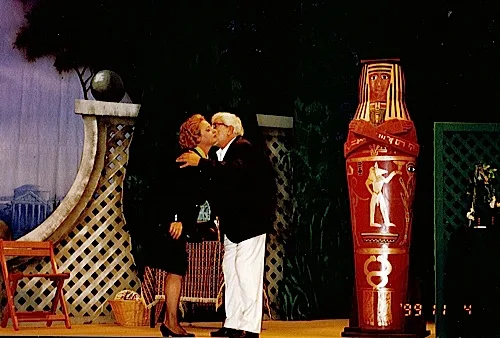
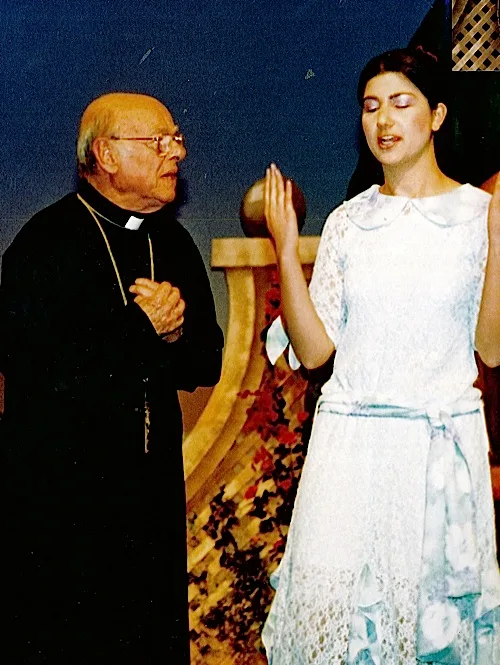
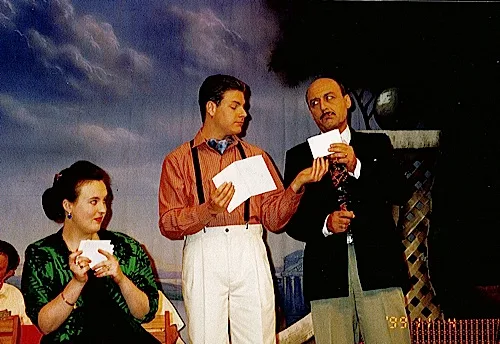
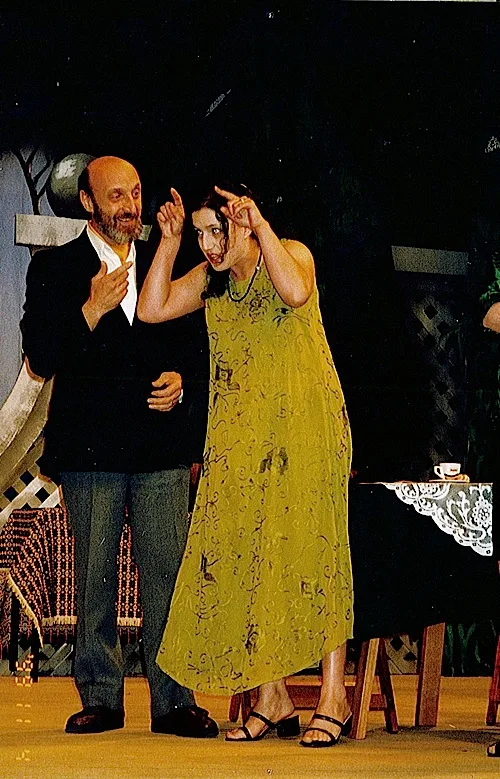
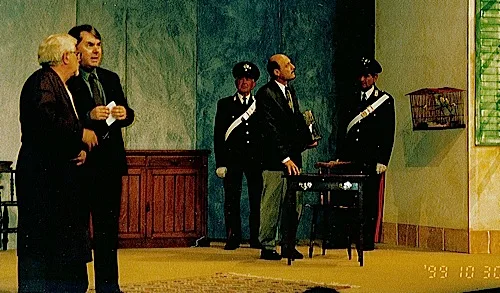
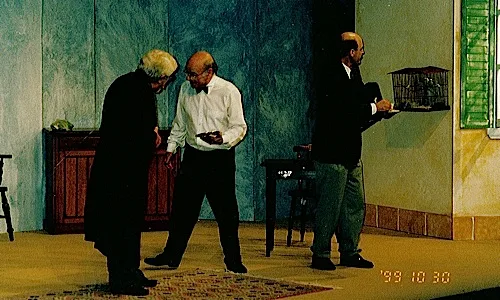
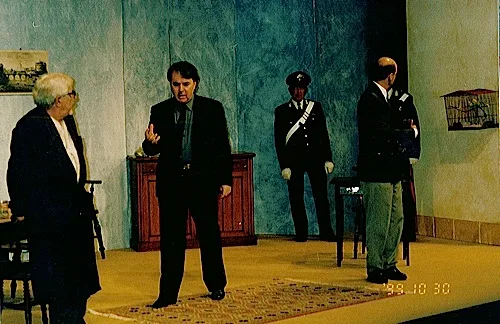
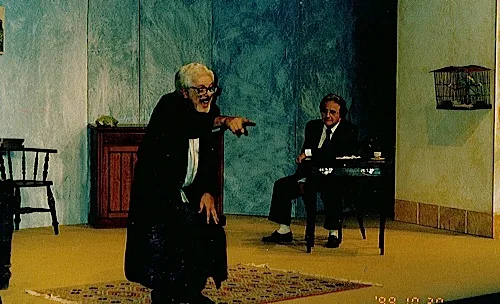
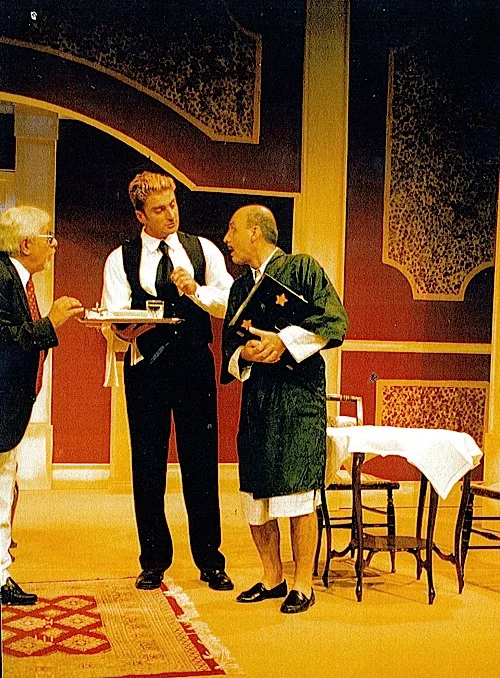
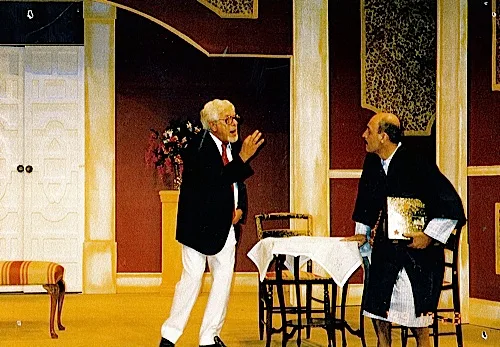
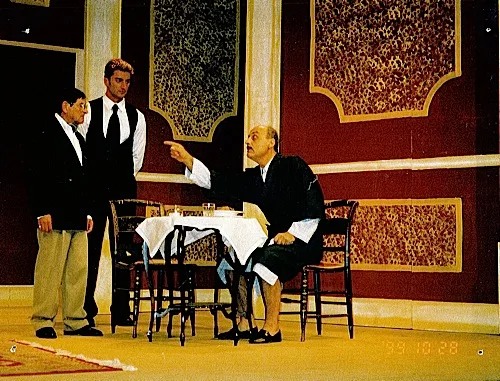
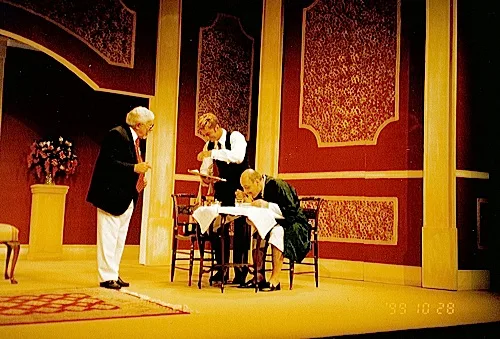
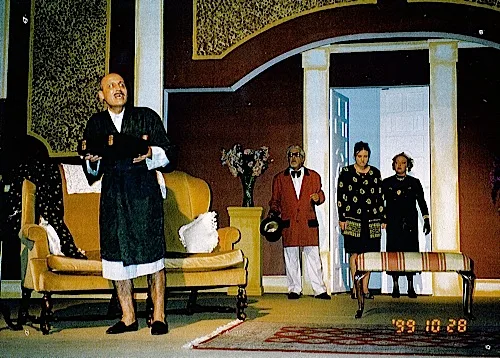
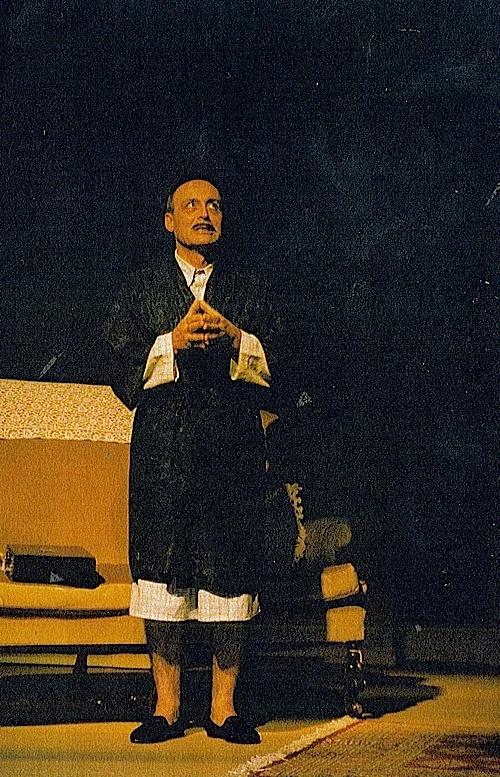
La grande magia
Directed by Luciano Pinto
Cast
- Signora Lo Cascio
- Claudia Vecchio
- Signora Marino
- Lucia Conte
- Signora Zampa
- Anna Monsello
- Signorina Zampa
- Gianna Corvaia
- Marta Di Spelta
- Michelle Valdrighi
- Calogero di Spelta, suo marito
- Luciano Pinto
- Mariano D’Albino, amante di Marta
- Dario Dalla Costa
- Il Cameriere dell’albergo Metropole
- Carlo Picchetti
- Gervasio Penna
- Nick Cappa
- Arturo Recchia
- Rino Pellone
- Amelia, figlia di Arturo
- Patricia Mesiti
- Otto Marvuglia, illusionista
- Bruno Napolitano
- Zaira, sua moglie
- Manuela Di Nola
- “Cameo role” (act 1)
- Giuseppe Fulgaro
- Il Brigadiere di P.S
- Enzo Sirna
- Roberto Magliano
- Peppino Tizzano
- Gennaro Fucecchia, servo di Calogero
- Andrea Basile
- Gregorio, suo fratello
- Elio Raspa
- Matilde, sua madre
- Nicoletta Ciampini
- Oreste Intrugli, suo cognato
- Bill Vocisano
- Rosa Intrugli, sua sorella
- Rosa Tizzano
Finti clienti, amici di Otto:
La famiglia di Calogero:
Musical Interludes by Giorgio Manfredi
About the play
Many of Eduardo De Filippo’s plays contain scenes of sheer farce but these are skilfully fused with dramatic situations, contradictions and paradoxes, which are common fare in human life. His great plays often depict human situations of a tragic-comic nature through which his characters try to steer their way to relative safety in a chaotic world, where fiction and illusion are often easily mistaken one for the other. These charactersé desperate efforts to give their lives some value and meaning make up the most positive aspect of his plays. Some of Eduardo’s unforgettable characters include Luca Cupiello, Gennaro Jovine, Pasquale Lojacono, Filumena Marturano and, of course, Calogero di Spelta and his co-protagonist Otto Marvuglia in La grande magia (“Grand Magic”). Eduardo once said:
“I am always more or less attached to the vision of life which I have portrayed in about forty plays. There is in my work a fundamental pessimism, the feeling that fate is cruel and inescapable, that it is impossible to flee from fate.”
Eduardo’s theatre is indeed full of characters who find themselves in difficult and painful situations but always treated by their author with understanding and compassion. This is also the case for Calogero Di Spelta in La grande magia, whose ideal image of a perfect wife is far above the reality he is forced to confront, and so he retreats into his own solitude as an act of defiance, which in the end leaves him disconsolate and teetering on the brink of madness. Defining this play as a “dramatic” or “ironic fable”, Eduardo gave us the key to understand its deeper meanings as he clearly stated in an interview:
“This is what I wanted to say: that life is a game, and this game cannot be sustained without illusions, which require sheer faith. I also wanted to say that every destiny is connected, as if by a thread, to many other destinies, in an endless game of roles: a game which we will never know in its totality but only in its irrelevant minute details.”